Eco-friendly exterior perimeter barrier defense provides an exterior-first mechanical and biological shield that protects living spaces without distributing broad-spectrum synthetic chemical residues throughout…
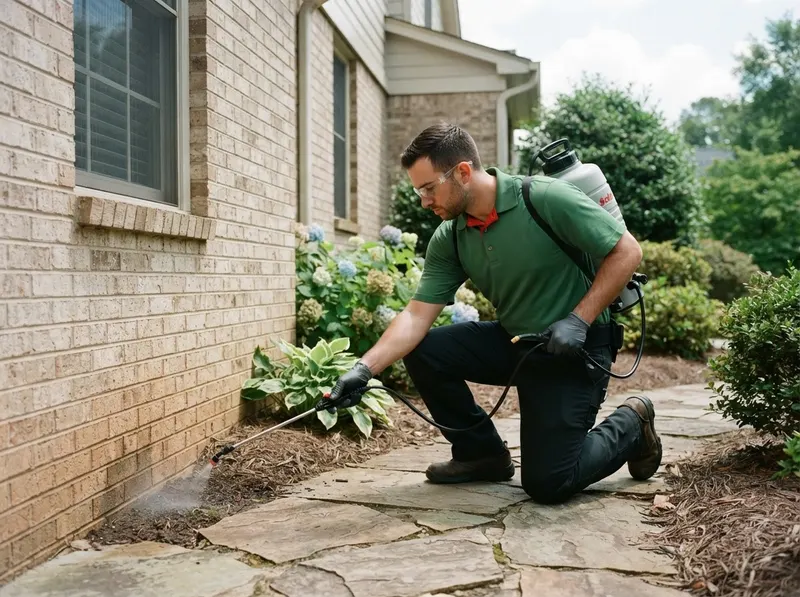
Eco-friendly exterior perimeter barrier defense provides an exterior-first mechanical and biological shield that protects living spaces without distributing broad-spectrum synthetic chemical residues throughout interior living zones. The process focuses on establishing an unbroken 6-foot liquid and granular zone, measuring 3 feet vertically up the slab or masonry wall and 3 feet horizontally across perimeter soil, pea gravel, or pine straw. Botanical compounds containing concentrated essential oils like thyme, rosemary, and peppermint extract disrupt the octopamine neuroreceptors found uniquely in invertebrates, leaving mammalian nervous systems unaffected. This botanical perimeter is supplemented with microcrystalline borate or silica dust injected directly into exterior conduit entries, brick weep holes, and the joint beneath siding skirts, drying out crawling pests before they access structural framing.
Suburban homes in Wake County frequently face heavy pest migration driven by climate shifts and landscape moisture. In neighborhoods like Preston and MacGregor Downs, mature tree canopies, irrigation systems, and proximity to golf course ponds create high dampness levels that push wood roaches and camel crickets toward structural footings during humid summer months. Similarly, residences in Lochmere and Twin Lakes border wetlands and lake basins that support dense perimeter pest populations, while slab-on-grade builds in Amberly, Carpenter Village, Wellsley, and Oxxford Hunt frequently experience ant scouts seeking indoor water lines through expansion gaps. Applying a low-impact exterior barrier neutralizes these insect pressure tracks at the soil-foundation interface without distributing synthetic pyrethroids near outdoor living areas, domestic pets, or decorative plantings.
Selecting an exterior perimeter barrier defense addresses perimeter pest entry while preserving indoor air quality. When choosing between targeted perimeter defense and total-structure indoor fumigation, the perimeter method prevents colonies from crossing the exterior envelope while keeping the interior free of chemical intervention. The operational trade-off is environmental durability: botanical active ingredients break down under direct ultraviolet sunlight and torrential rainfall faster than synthetic compounds, degrading across a 60- to 90-day window rather than remaining stable for 180 days. A property owner balances lower environmental accumulation and reduced pet vulnerability against the natural degradation cycle of organic formulations.
Every job gets a firm, written price after a free on-site visit.
Tell us about your eco-friendly exterior perimeter barrier defense job in Cary and we'll send a clear, written quote, usually the same day.
 PestHarbor Pest Control